The Killer Angels On Screen

Nearly two decades after The Killer Angels’ release and ill-success, the novel’s legacy took on a new medium: film.

With the triumphant popularity of Ken Burns’ 1990 documentary series The Civil War, it was quickly realized by media mogul Ted Turner that this period of American history was of interest to sizable audiences. This resulted in a fateful meeting between him and film director Ronald Maxwell that would ultimately bring both The Killer Angels and Gods and Generals to the big screen. Continue reading to learn more about how filmmaking is forever entwined in the legacy of The Killer Angels.

On the set of Gettysburg. [Caption and credit TBD]

The Civil War

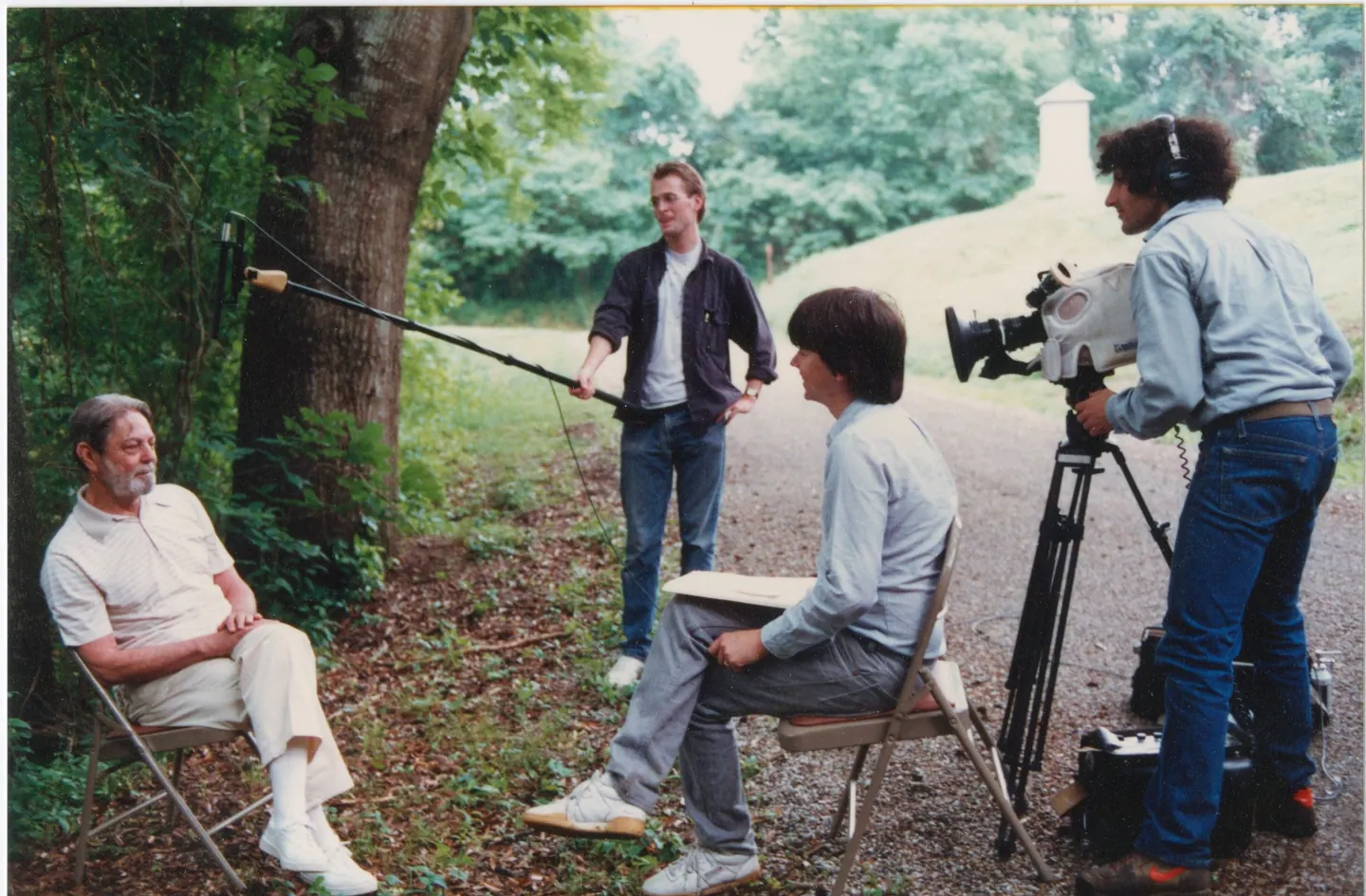
After he finished reading The Killer Angels in 1984, filmmaker Ken Burns was struck with the inspiration to produce a documentary on the entirety of the American Civil War. This documentary miniseries, The Civil War (1990), went on to become a massive success, garnering record viewership for public broadcasting, and catapulted Burns’ career towards the level of recognition and popularity he continues to enjoy today. The series has been cited as a catalyst for reigniting historical interest in the Civil War amongst viewers, planting the first seeds for rediscovery of Michael Shaara’s seminal novel.

In September of 1990, just over a week before The Civil War began airing, another filmmaker by the name of Ronald Maxwell approached Burns at a New York Civil War Roundtable meeting with the connection that he too was hugely inspired by The Killer Angels, hoping ardently to adapt it into a narrative feature with the rights he had acquired from Shaara.

From this brief interaction propelled by a shared appreciation, Burns introduced Maxwell to media giant and producer Ted Turner in March of 1991 at the 2nd Annual Producers Guild of America Golden Laurel Awards where Burns was being recognized for The Civil War. Citing Burns’ stellar achievements, Turner and Maxwell enthusiastically agreed that Hollywood needed more Civil War stories, leading Maxwell’s Killer Angels adaptation to be greenlit for production by Turner Pictures shortly thereafter.

Where to watch

The Civil War by Ken Burns can be viewed on PBS and streamed through the PBS App.

Ken Burns and his crew interview a seated man outdoors beside a tree, with a boom mic and a film camera on a tripod.

Gettysburg

Gettysburg (1993), directed by Ronald Maxwell, was released in theaters on October 8th, 1993 with distribution from New Line Cinema, officially giving The Killer Angels new life as an onscreen epic. The film had its television premiere on Turner Network Television (TNT) in the summer of 1994, claiming tens of millions of new viewers and the highest ratings of any cable miniseries broadcast to that point. The popularity of the film led to a massive spike in purchases of its source material, making The Killer Angels a #1 New York Times bestseller after two decades of relative obscurity.

Despite the film’s ultimate success for both Maxwell and Michael Shaara’s legacy, the lead up to this achievement came with many tribulations. Maxwell first purchased the option to adapt The Killer Angels in 1978 and connected with Shaara soon after to begin development, intending for him to pen the screenplay. They met at the Gettysburg Battlefield so that Shaara could properly immerse Maxwell (who had not previously visited the grounds) in his story, taking him to all the key locations featured in the book and getting them on the same page regarding Shaara’s creative choices and interpretations.

This strong start eventually fizzled out when development proved slow, creative differences ensued, and the screenplay didn’t pique the interest of Hollywood producers. Shaara stood firmly on allowing only Maxwell to adapt the novel, but grew increasingly frustrated as months passed without any real advances in the project. Maxwell, however, was never deterred and remained committed to his efforts in spite of the rejections he was amassing.

Maxwell formally acquired the rights to The Killer Angels in 1981 after going through major lengths to fund this endeavor, unwaveringly determined to see the film produced. In the years that followed, contempt grew between Maxwell and Shaara as financial complications arose and efforts to communicate became fraught, teetering the project and its already stagnated development toward a potential internal collapse. Michael Shaara’s untimely death in 1988 also came during this period of tumult, putting the creative responsibility of the film entirely into Maxwell’s hands. He would go on to write the final screenplay and continue pitching the adaptation, resolute that it would find its audience even if Shaara himself would not be able to witness the achievement.

Gettysburg was finally greenlit for production by Ted Turner in 1991 and began filming in Pennsylvania in the summer of 1992, bringing a triumphant conclusion to 13 years of development and tenacity.

Where to watch

Gettysburg can be rented on Amazon Prime Video, Apple TV, and Fandango.

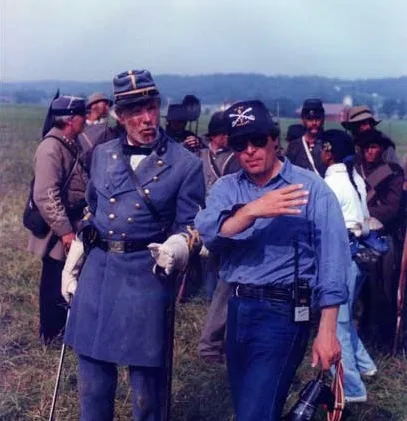
Director Ron Maxwell, in sunglasses and a cap, gestures beside Ted Turner in Confederate uniform on the set of Gettysburg.
Ron Maxwell with Ted Turner during the production of Gettysburg.

Jeff’s Letter to Ron

After Michael Shaara’s passing, Gettysburg director Ron Maxwell was able to maintain a connection with the Shaara family, keeping them involved with his adaptation of The Killer Angels. In 1992, Maxwell invited Jeff Shaara to the set of the film, allowing him to witness how the production was bringing his father’s vision to life on the Gettysburg Battlefield.

Following this visit, Shaara wrote a fateful letter to Maxwell that sparked a curiosity within him about Shaara’s potential as a writer.

The full letter can be viewed below
Letter · transcribed
204 West Earle St
Greenville, SC 29609

Dear Ron,

Thank you. For all of it.

I have never felt so welcome in any place in my life. There are a great many reasons why this past weekend was so extraordinary, but Lynne and I both came away from the experience with a shared sense of what every person we spoke with also feels. Others put it better than I, and you said it in your way as well: the voices. After we parted your company on Sunday, I took Lynne around Little Round Top, and over to Lee’s view of Pickett’s charge. We spent a great deal of time simply absorbing it all. They were all there: the voices.

When we came back home, I called both my mother and Lila, and made some attempt at explaining what the whole experience had been like, but I doubt I will ever be able to put it into words. I am after all, not the Writer. I may have inherited a good many things from my father, but that glorious gift was his alone. What I have done to earn success in my life is be a good businessman, something my father was not. It is an irony that I cannot express strongly enough that very likely through my efforts, and yours, (and probably many others) Michael Shaara will be a famous man. He always wanted that, but I don’t believe he understood how to play the games. I think he resisted having to play by the rules of others. You may have known him well enough to know that his great need was to leave something behind. What he never understood was that to best succeed at that, he needed some help. He’s getting it now.

This weekend, I watched you work on your own dream, and quite frankly, I was greatly impressed. The intense feelings that everyone brought to this project do not measure up to what you have inside you. Everyone feels the drive you bring to this project, and many expressed their respect for your work. But I respect you for more than just your professionalism, or your competence as a director. I know what this has meant to you for such a long time. My God man, you’re living out your dream. It matters little what status you may achieve after this project, because you have succeeded where it matters most.

I probably did a poor job of expressing to Lila how the experience of this weekend deeply affected me. It would sound considerably melodramatic to many, but I believe you understand what I mean. I too have heard the voices.

It is simpler in many ways to thank you than to thank my father. Whether he could hear it or not, I don’t know. Until now that’s not the kind of thing I’ve thought much about. But in all that lies ahead, I will do the best I can. Take care.
Jeff Shaara

Looking to develop more Civil War related projects after the success of Gettysburg, Ted Turner and Ron Maxwell turned to Michael Shaara’s son and the budding literary prowess they saw in his writing. From there, a definitive prequel to The Killer Angels was set in motion.

Gods and Generals

In 1996, Jeff Shaara published his debut novel, Gods and Generals: a prequel to The Killer Angels that built on his father’s work and matched its style and intrigue. With the continued popularity of Gettysburg (1993) and the battlefield tourism it ignited, Gods and Generals debuted as a bestseller, laying the foundation for Ron Maxwell and Ted Turner’s next collaboration: the novel’s film adaptation.

Gods and Generals went into production in the fall of 2001, being produced once again by Turner Pictures. It brought filming to various areas of Maryland, Virginia, and West Virginia, using its increased budget and resources to hone in on executing Maxwell’s directorial vision and provide fulfilling opportunities to the vast Civil War reenactor communities of these areas. It had its theatrical release on February 21st, 2003 with distribution from Warner Bros. Pictures, bringing a second Shaara Civil War story to the big screen a decade after the first.

This project altered the course of Jeff Shaara’s career. Previously pursuing private business, Maxwell’s initial collaboration with Shaara is what propelled him into taking up writing full time. The immediate success of the Gods and Generals novel landed him continued deals with publishers that allowed him to explore narrating many more events in American History. Beginning with a post-Gettysburg sequel to The Killer Angels titled The Last Full Measure (published in 1998), Shaara’s breadth of work now includes topics spanning from the American Revolution (The Glorious Cause, published in 2002) to the Cuban Missile Crisis (The Shadow of War, published in 2024). Shaara is still publishing today, experiencing an enduring success that is a far cry from the uncertainty that came with following in his father’s footsteps.

Where to watch

Gods and Generals can be rented on Amazon Prime Video, Apple TV, and Fandango.

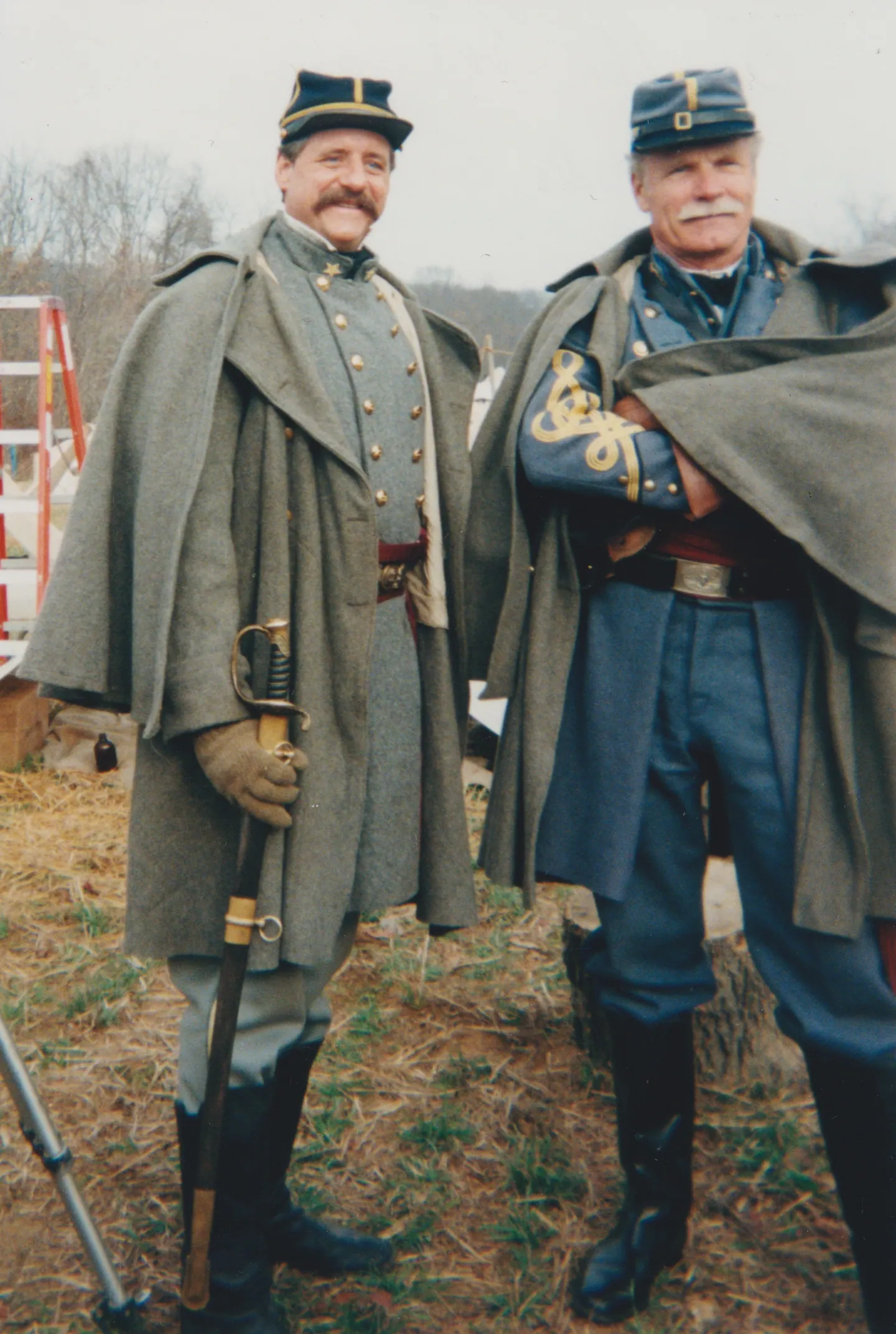
Jeff Shaara and Ted Turner in Civil War officers’ uniforms and greatcoats on the set of Gods and Generals.
Jeff Shaara and Ted Turner on the set of Gods and Generals.