Landmark 01June 29
Chambersburg Pike
Gettysburg National Military Park · [Tour stop TBD]
The road from the west along which Lee’s army converged on Gettysburg. [Description TBD]
The Killer Angels is rooted in real ground. Follow the novel across the fields of Gettysburg, day by day, to the places where its scenes unfold.
Each stop pairs a landmark you can visit today with the moment it plays in the story. [Intro description — supplied by the filmmakers.]
As the two large armies spread out over the countryside they look to consolidate their forces. The ten roads leading into Gettysburg like spokes on a wheel made it strategically important. In 1863, Gettysburg was a bustling town of 2,400 people. It was the county seat, had a thriving carriage industry and was a center of learning with both a Lutheran Seminary and a College.
Lee—unsure of his surroundings—moved his men through Pennsylvania. Most of his cavalry, under the command of J.E.B. Stuart, was on a raid, far from Lee’s main army. Without Stuart to monitor Union positions, Lee blindly made his way through enemy territory. On June 28th, he learned from a Rebel spy that the Union army was nearing Pennsylvania under a new commander, George Meade. Lee wanted a battle before Meade adjusted to command. Lee ordered the army to assemble in front of the mountains ten miles west of Gettysburg.
The road from the west along which Lee’s army converged on Gettysburg. [Description TBD]
[Landmark description — supplied by the filmmakers.]
The battle began on July 1st as both sides raced to the crossroads town of Gettysburg. Fighting erupted west and north of Gettysburg as Union cavalry under John Buford delayed initial Confederate progress. Early in the action the senior Union commander on the field, John Reynolds, was killed. The Rebels had the advantages of numbers and positions and the Union forces ultimately retreated in panic. It appeared that Lee would gain the decisive victory he desired on Northern soil. Most of Gettysburg’s civilians hid in their cellars. African-Americans fled the oncoming Confederate army. Finally Union General Hancock arrived and rallied Union men on Cemetery Hill southeast of town. As the day’s fighting drew to a close, despite protests from his best general, James Longstreet, Lee made plans to attack the Union position the following day.
Where John Buford’s cavalry held the high ground west of town in the battle’s opening hours. [Description TBD]
From the seminary’s cupola, Union officers watched the Confederate approach. [Description TBD]
On the second day of battle Confederates attacked the Union flanks south and east of town. To the south, the Rebels took Devils Den and the Peach Orchard and pushed forward. Fierce fighting by Joshua Chamberlain’s 20th Maine Regiment and others barely held the high ground of Little Round Top. Despite determined Confederate pressure all along the Union positions south of town, the Northerners ultimately held. Soon Rebels attacked the opposite end of the Union line to the east and southeast of town, crucial positions on Culps and Cemetery Hills. Fighting raged into the evening. Again Union forces held. Lee believed one more attack the following day would force them to retreat. Meade’s generals, their men battered, decided to stand their ground.
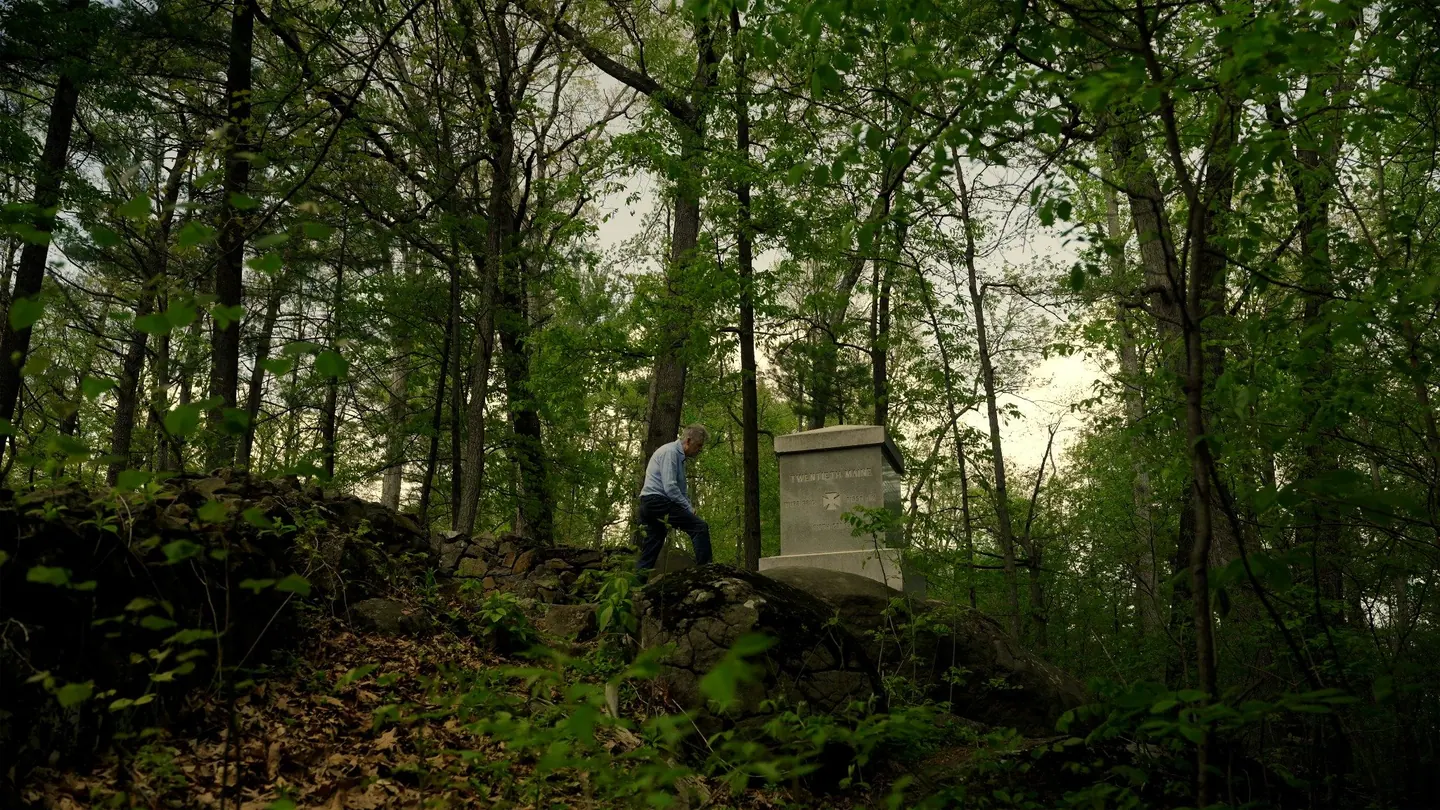
Where Joshua Lawrence Chamberlain and the 20th Maine held the end of the Union line—among the novel’s best-known chapters. [Description TBD]
A tangle of boulders below Little Round Top, fought over through the afternoon. [Description TBD]
On the third day, following the largest cannon bombardment in American history, 12,000 Confederate soldiers marched across open fields toward the Union center south of town: Pickett’s Charge. Under constant fire, only a few hundred of them would reach the target of the attack at the Bloody Angle. There the Rebel General Lewis Armistead fell at the hands of troops under the command of his best friend, the Union General Hancock. The Union repulsed the great charge and won the battle.
The ground from which Pickett’s Charge stepped off toward Cemetery Ridge. [Description TBD]
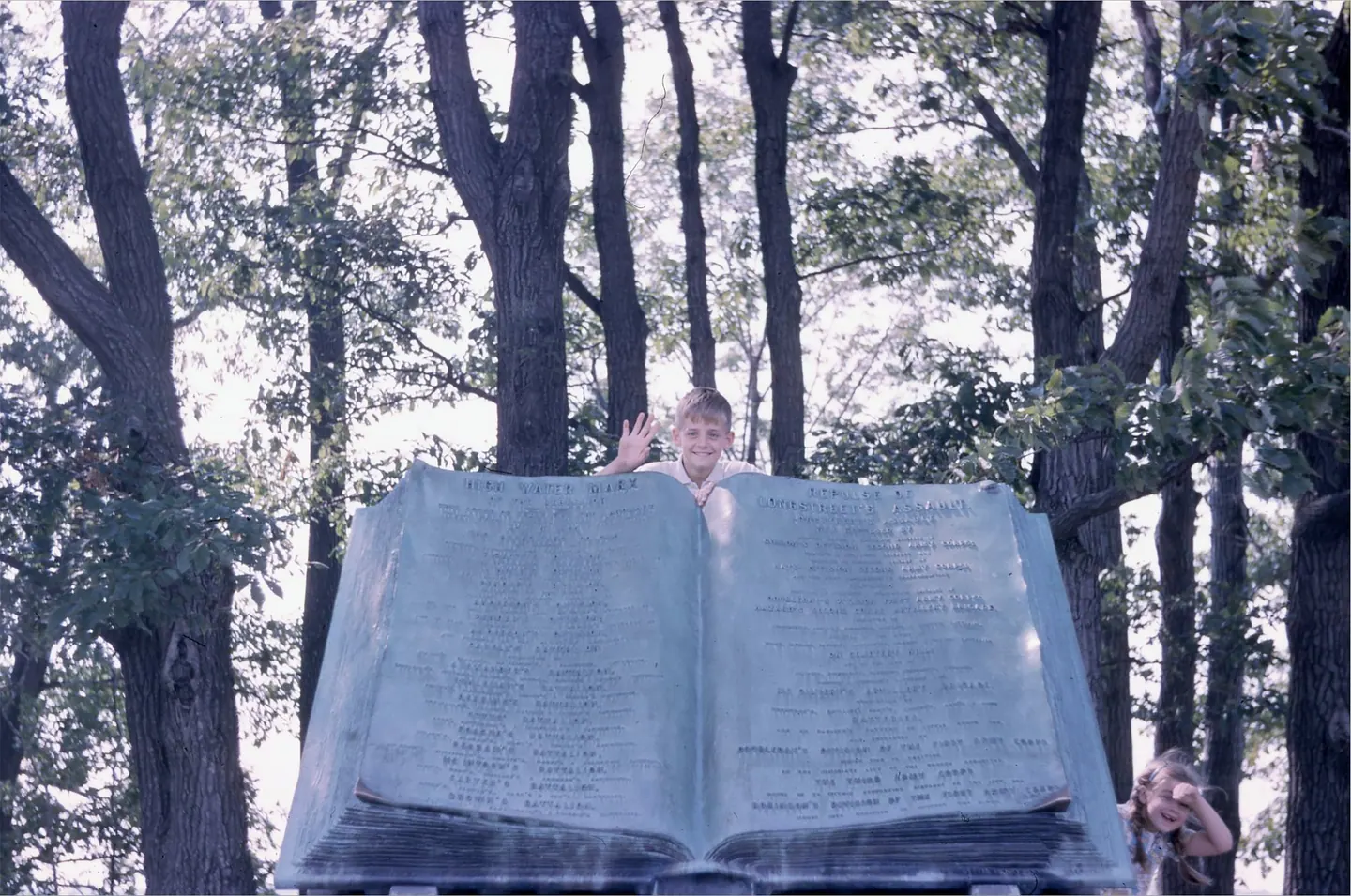
Where the charge reached the Union line, and where Lewis Armistead, one of the novel’s central figures, fell. [Description TBD]